
The impact of lead glass thickness on the level of radiological protection
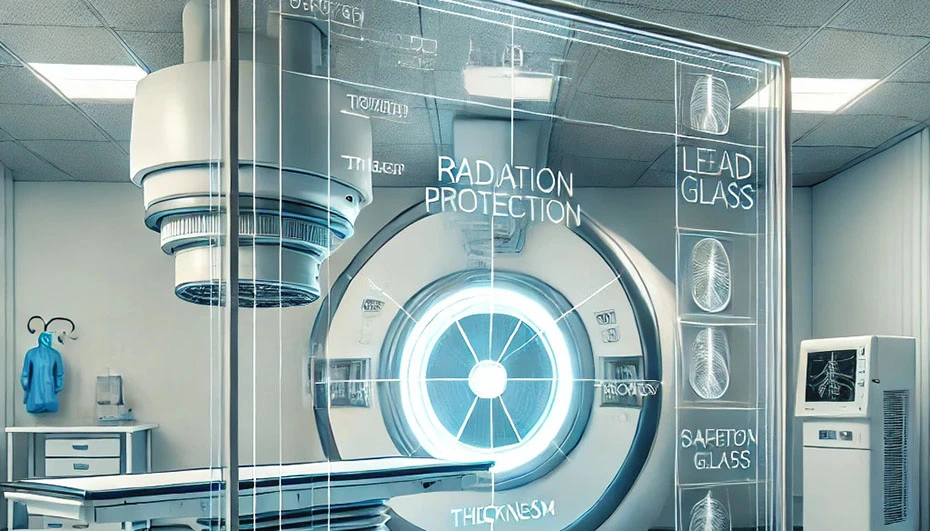
Lead glass and lead windows are indispensable materials in radiological protection, especially in environments exposed to ionizing radiation. In places like diagnostic rooms, research laboratories, or industrial facilities, they provide effective protection for staff and patients against the harmful effects of X-rays and gamma radiation. A key parameter determining the effectiveness of lead glass is its thickness, which impacts the level of protection, weight, and installation method. In this article, we will thoroughly discuss how the thickness of leaded RTG glass affects its protective properties and applications.
If you want to learn more about the general properties of leaded RTG glass, we invite you to read our earlier article: Lead glass — safety in medicine and industry.
How does lead glass work?
Lead glass differs from ordinary glass due to its high lead content, which provides the ability to absorb ionizing radiation. Lead, as an element with a high atomic number, effectively blocks radiation that could otherwise pass through regular glass and pose a health hazard. The process of energy absorption by lead particles is crucial for radiological protection, while the maintained transparency allows the glass to be used in settings requiring visual observation.
Thanks to these properties, lead glass is widely used across various industries, such as medicine, industry, and scientific research. It can be found in control windows, protective doors, and more advanced constructions like mobile X-ray screens.
Applications of lead glass in radiological protection
Lead glass is used wherever there is a need for protection against ionizing radiation while maintaining visibility for observation.
Diagnostic X-ray rooms
In medical facilities, lead glass is used in X-ray windows, protective doors, and shields, allowing doctors and radiologic technicians to work safely with diagnostic equipment. Its transparency ensures that procedures can be monitored without compromising safety.
Research laboratories
In laboratories where research involving radioactive materials is conducted, lead glass is an essential part of the equipment. It protects workers from radiation exposure while enabling clear observation of experiments and processes.
Industrial facilities
In industry, lead glass is used in shielding devices for inspection equipment and scanners that emit X-rays. These applications are critical for ensuring quality control while protecting workers from harmful radiation.
Why does the thickness of lead glass matter?
The thickness of leaded X-ray glass is one of the most critical technical parameters directly affecting the effectiveness of radiological protection. The thicker the glass, the more lead it contains, allowing it to better absorb ionizing radiation, such as X-rays and gamma rays. This ability is especially crucial in high-radiation environments, where effective shielding is vital to ensuring the safety of both staff and patients.
Why is thickness so important? In environments where radiation is used for diagnostics, research, or industrial processes, selecting the appropriate glass thickness is essential to provide the necessary level of protection. The right thickness ensures optimal absorption of radiation while maintaining the functionality and safety of the space.
Benefits of increased glass thickness
- Enhanced protection: Thicker lead glass absorbs a greater amount of radiation, significantly reducing the risk of exposure to ionizing doses. This is especially critical in environments with frequent or high levels of radiation use.
- Safety in high-risk environments: In facilities such as nuclear laboratories or industrial plants, thicker glass layers are essential for safeguarding workers against radiation hazards, ensuring their safety during operations.
- Compliance with safety standards: Thicker glass more easily meets stringent technical requirements and radiological protection standards, making it a reliable choice for ensuring regulatory compliance and long-term safety.
The thickness of lead glass is directly linked to its ability to absorb radiation, making it a critical parameter in radiological protection. The process of energy absorption and scattering by thick layers of glass effectively reduces the amount of radiation that can pass through the barrier, ensuring safety in environments exposed to ionizing radiation.
Selecting the appropriate glass thickness depends on its specific application and the level of radiation it needs to absorb. This makes consulting with an expert in the field essential to ensure optimal protection and compliance with safety requirements.
Examples of applications for different thicknesses of lead glass
Selecting the appropriate thickness of lead glass is crucial to ensuring effective radiological protection. This choice primarily depends on two factors: the level of radiation in a given environment and the specific requirements of the location where the glass will be used. Different thicknesses of lead glass provide varying levels of protection, making it essential to tailor their application to specific purposes and technical requirements.
Lead glass with 0.5 mmPb thickness
Glass with a 0.5 mmPb equivalence is one of the thinnest options available on the market, yet it still provides adequate protection in low-radiation environments.
Applications:
- Diagnostic X-ray rooms: In such spaces, radiation doses are relatively low, making 0.5 mmPb glass sufficient to protect both staff and patients.
- Standard protective screens: Lightweight and thin glass is an ideal choice in scenarios where reducing construction weight and maintaining transparency are key priorities.
Advantages:
- Lower weight compared to thicker options.
- Ease of installation, especially in lightweight structures.
- Lower cost, making it an economical choice for standard applications.
Lead glass with 1.5 mmPb thickness
Glass with a 1.5 mmPb equivalence offers a higher level of protection, making it suitable for more demanding environments.
Applications:
- Operating rooms with X-ray equipment: In these settings, X-rays may be used for extended periods and at higher intensities, necessitating thicker glass with enhanced protective properties.
- Mobile radiological shields: This type of glass is used in mobile screens that can be repositioned to meet the needs of specific procedures.
Advantages:
- Higher level of radiological protection compared to thinner glass.
- Versatile applications, particularly in medical settings with moderate radiation exposure.
Notes:
The 1.5 mmPb thickness strikes a balance between protection effectiveness and weight, requiring more stable mounting structures than thinner glass.
Lead glass with 2.1 mmPb thickness and above
Thicker glass, such as that with a 2.1 mmPb equivalence, provides the highest level of protection and is designed for environments with high radiation intensity.
Applications:
- Research laboratories: In labs conducting experiments with radioactive materials, thick glass protects staff from gamma and X-ray emissions.
- Nuclear industry and energy sector: In industrial settings, such as nuclear power plants or production lines using advanced radiographic technologies, 2.1 mmPb or thicker glass is indispensable.
Advantages:
- Maximum possible protection against ionizing radiation.
- Suitable for extremely demanding conditions, such as working with highly radioactive materials.
Notes:
Thicker glass requires robust mounting frames and stronger support structures, increasing installation costs. Its higher weight and price can pose logistical challenges, but these are justified in environments where radiological protection is a top priority.
How to choose the thickness of lead glass?
Factors determining the choice
- Type of radiation: Gamma radiation requires thicker glass with a higher lead equivalence compared to X-rays. The type of radiation influences the necessary level of protection, making this a primary consideration in the selection process.
- Radiation intensity: In environments with higher radiation intensity, such as laboratories or industrial facilities, thicker glass is essential to ensure adequate shielding. The intensity level helps determine the minimum required thickness for safety.
- Location of the glass: Glass installed in control windows can be thinner than that used in protective doors or mobile X-ray shields. The placement and purpose of the glass significantly impact the choice of thickness.
- Budget: While thicker glass is more expensive, it is a worthwhile investment for ensuring the highest level of protection. Balancing budget constraints with safety requirements is crucial when selecting the appropriate product.
Technical standards for lead glass
Lead glass used in X-ray applications is a specialized material that must meet specific technical standards to ensure safety in environments exposed to ionizing radiation. These requirements are regulated both internationally and nationally, guaranteeing that lead glass used for radiological protection adheres to the highest standards of safety and durability.
Compliance with these standards ensures that the glass provides effective shielding, maintains its structural integrity, and meets the demands of various applications, such as medical diagnostics, research laboratories, and industrial processes. By following strict regulations, manufacturers ensure the reliability and efficiency of lead glass in protecting personnel and patients from harmful radiation.
International requirements
International standards, such as ISO (International Organization for Standardization) and EN (European Norms), define detailed parameters that lead glass must meet to ensure its effectiveness and reliability. These standards address critical aspects, including:
- Minimum glass thickness: Appropriate thickness ensures effective protection against various types of radiation, including X-rays and gamma rays. This is fundamental to maintaining safety in high-radiation environments.
- Lead equivalence (Pb eq): Standards precisely specify the thickness required to provide a certain level of radiological protection, ensuring consistent and measurable safety performance.
- Mechanical resistance: Lead glass must withstand physical damage, such as cracks or scratches, which could compromise its protective capabilities. Durability under stress is a key requirement for maintaining long-term effectiveness.
- Light transmission: For lead glass, retaining transparency is crucial to facilitate observation in medical or industrial procedures. This balance between protection and visibility is a defining feature of high-quality lead glass.
These international guidelines ensure that lead glass not only provides adequate radiological shielding but also meets practical usability needs in a wide range of applications.
Regulations in Poland
In Poland, the use of lead glass and other protective materials in the context of ionizing radiation is overseen by the National Atomic Energy Agency (Państwowa Agencja Atomistyki, PAA). This agency establishes detailed regulations regarding radiological protection, including the following minimum requirements:
- Protection levels in medical facilities: The agency specifies the minimum thickness of lead glass based on the type of equipment (e.g., X-ray machines, CT scanners) and the radiation intensity they generate. This ensures adequate safety for medical staff and patients.
- Safety in laboratories and industry: Standards regulate protection in research and industrial environments, where radiation exposure levels are often higher. These regulations are crucial for maintaining safety in laboratories working with radioactive materials and in industrial settings using radiological technologies.
By adhering to these regulations, facilities ensure compliance with safety standards and protect individuals from the harmful effects of ionizing radiation.
The importance of certifications
Products with certifications such as ISO and EN are a guarantee of quality and compliance with current regulations. These certifications are awarded only after rigorous testing that confirms the following:
- Effectiveness of radiological protection: The product must block radiation as specified in its declared parameters, ensuring reliable shielding in various applications.
- Durability and reliability: Lead glass should maintain its protective properties over an extended period, even under challenging operating conditions. Long-term effectiveness is crucial in environments with continuous radiation exposure.
- Regulatory compliance: Certified products meet all formal requirements, which is particularly critical during technical inspections in medical and industrial facilities.
Certifications provide confidence in the safety and performance of lead glass, ensuring it meets the highest standards for radiological protection.
Why are standards so important?
Adhering to technical standards in the production of lead glass is not merely a formality—it is fundamentally a matter of safety. Inadequate specifications for lead glass could result in insufficient protection against radiation, exposing staff and patients to serious health risks.
Standards ensure that the glass provides the required level of shielding to prevent harmful radiation exposure. Selecting lead glass that complies with these standards is a crucial step in achieving the highest level of radiological protection and ensuring long-term safety in environments where radiation is present.
Costs vs. Efficiency
The thickness of leaded X-ray glass directly impacts its price, but cutting costs on radiological protection can lead to serious health risks. Investing in certified products ensures long-lasting effectiveness and safety, providing reliable protection against radiation over time. Prioritizing quality over short-term savings is essential for maintaining a safe environment in medical, industrial, or research settings.
Summary
The thickness of lead glass plays a crucial role in ensuring effective radiological protection. Choosing the right product should take into account the type of radiation, its intensity, the installation location, and the available budget.
We invite you to explore our range of radiological protection products at Coradika.pl, where you’ll find a wide selection and expert advice to meet your specific needs.


