
Lead glass in construction — How to ensure safety in medical and industrial facilities?
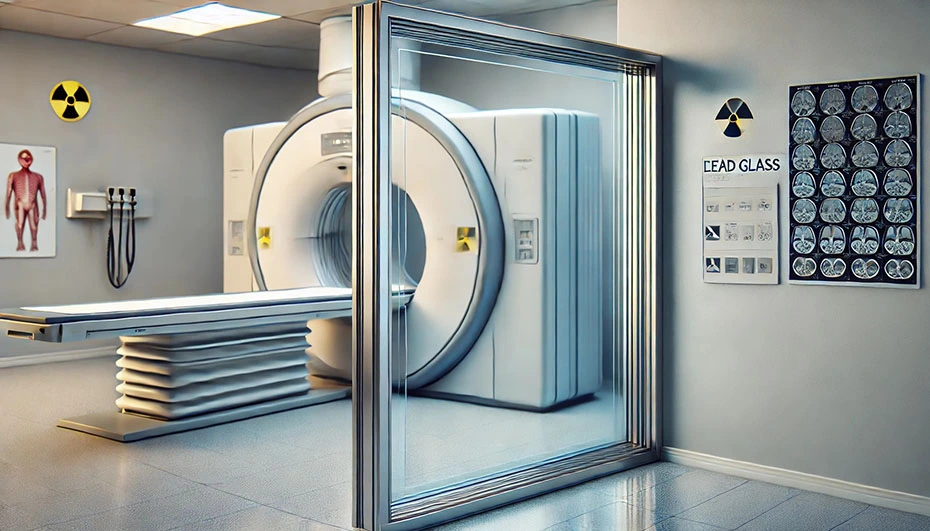
Lead glass is one of the most important materials used in radiation protection, especially in construction designed for medical and industrial facilities. Thanks to its unique properties, such as the ability to absorb ionizing radiation and high transparency, lead glass and RTG lead glass panels are widely used to ensure health and safety. They can be applied in diagnostic facilities, such as X-ray rooms, as well as in research laboratories and the pharmaceutical industry, where high standards of radiation protection are required.
Why is lead glass so essential? What applications do RTG lead glass panels have in various industries? In this article, we will delve into the key aspects of their properties and applications in construction.
Why is lead glass essential?
Radiation Protection in Everyday Life
In places where devices emitting X-rays are used, such as X-ray rooms, laboratories, or the pharmaceutical industry, RTG lead glass plays a crucial role in minimizing risks to staff and patients. Its protective properties are indispensable in blocking radiation while still allowing for observation and control.
Main applications of lead glass in construction
Medical facilities
Lead glass plays a vital role in construction designed for healthcare protection. Hospitals, clinics, and diagnostic offices must comply with strict radiation protection standards, making RTG lead glass panels an indispensable element of such facilities.
Applications in medicine:
- Lead glass panels in X-ray rooms: Installed in walls and doors, they provide complete radiation isolation while allowing visual monitoring.
- RTG windows in diagnostic offices: Used for observing procedures such as CT scans, angiography, or mammography.
- Lead glass in mobile shields: Applied in areas requiring portable protective solutions, such as operating rooms.
RTG lead glass is available in various options, allowing it to be tailored to the specific requirements of buildings and diagnostic equipment.
Industrial facilities
In industry, ionizing radiation is widely used in both production and research processes. Lead glass panels ensure safety in environments where radiation protection is essential.
Examples of applications:
- Pharmaceutical and chemical laboratories: RTG lead glass panels are installed in protective windows, allowing safe observation of research processes.
- Product quality control: In industrial facilities, such as in the food industry, lead glass panels are used in equipment for inspecting products for defects.
- Nuclear energy: In facilities related to nuclear power, RTG windows are a key component in ensuring the safety of operators and researchers.
Public and specialized infrastructure
Not only industry and medicine benefit from the advantages of lead glass. In public spaces, such as airports or research centers, radiation protection is equally crucial.
Specialized applications:
- Airports and public facilities: RTG lead glass panels used in baggage scanners protect operators from radiation exposure.
- Research laboratories: In scientific institutes studying radioactive materials, lead glass panels allow safe work without sacrificing visibility.
- Industrial scanners: Employed in devices inspecting metal structures or industrial components for defects.
Properties of lead glass
Radiation blocking
Lead glass panels effectively block ionizing radiation, such as X-rays and gamma rays. The lead content in the glass (measured in mmPb) determines the level of protection, allowing the product to be tailored to specific needs.
High transparency
Despite its lead content, a lead glass panel maintains excellent transparency, making it suitable for applications where visual contact is essential.
Resistance to damage
RTG lead glass is highly durable, offering strong mechanical resistance and chemical stability, making it a long-lasting protective material.
Selecting lead glass for a construction project
Thickness and Pb coefficient
The selection of thickness and protection coefficient depends on the type and intensity of radiation. Lead glass panels are available in standard variants with protection levels ranging from 0.5 mmPb to as high as 4.7 mmPb.
Types of lead glass
- Laminated glass: Combines radiation protection with additional features, such as fire resistance.
- Tempered glass: More resistant to mechanical damage, ideal for high-traffic areas.
- Custom formats: RTG lead glass panels can be tailored to the architectural requirements of a specific project.
Examples of projects using lead glass
- Hospitals and clinics: RTG windows in diagnostic rooms and mobile protective shields equipped with RTG lead glass panels.
- Scientific laboratories: RTG lead glass in controlled areas where research on radioactive materials is conducted.
- Industrial facilities: Protective glass in devices for X-ray inspection.
Summary
Lead glass is an indispensable component of radiation protection in medical and industrial construction. Its properties, such as effective radiation shielding, durability, and adaptability, make it a key material across various industries. By choosing RTG lead glass panels, you invest in safety and operational efficiency.
Learn more about the applications of RTG lead glass panels and find the right solution for your project on the Coradika website.


